Wednesday, January 17, 2018

Bravo British Supermarket ! ....Goodbye plastic packaging

Image result for images of plastic packaging waste

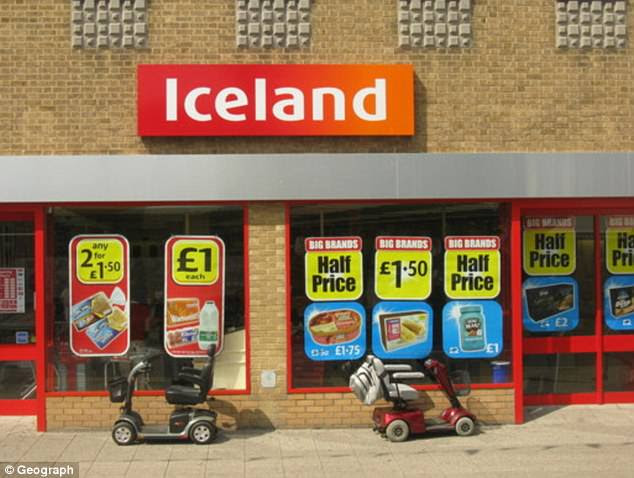
ICELAND SUPERMARKET bans plastic:

 UK Supermarket chain becomes first in the world to remove plastic packaging from ALL its own-label products

  • Iceland supermarket has become the first to remove plastic packaging in full
  • All it's own-label products will have no plastic packaging within five years
  • It puts pressure on other supermarkets to follow suit a lower levels of pollution 
  • Packaging on 1,400 product will be replaced across more than 250 suppliers
  • Last week Theresa May set a 25-year deadline to banish 'avoidable' plastic
A UK supermarket will be the first in the world to remove plastic packaging from all of its own-label products. 'ICELAND's' landmark move puts pressure on its rivals to follow suit amid public demands to turn back the tide of plastic pollution. The company, which has more than 900 stores, has a five-year plan to ditch plastic from all of its own-brand products.
Packaging on 1,400 product lines will be replaced, and the changes involve more than 250 suppliers. First to go will be plastic instant meal trays in favour of wood-pulp alternatives made in Britain. Plastic bags used for frozen vegetables and other food will then be dropped in favour of paper alternatives.
ICELAND, which has already removed plastic disposable straws from its own range of products, is also working on alternatives for plastic bottles and milk cartons. Last week Theresa May set a 25-year deadline to banish 'avoidable' plastic and called on supermarkets to introduce plastic-free aisles.
ICELAND's move – the latest victory for the Turn the Tide on Plastic campaign – suggests it is possible to go further and faster.
ICELAND managing director Richard Walker said yesterday: 'The world has woken up to the scourge of plastics."
"A truckload is entering our oceans every minute, causing untold damage to our marine environment and ultimately humanity – since we all depend on the oceans for our survival."
"The onus is on retailers, as leading contributors to plastic packaging pollution and waste, to take a stand and deliver meaningful change."
"Other supermarkets, and the retail industry as a whole, should follow suit. This is a time for collaboration."
 
The packaging - currently made from polypropylene plastic - will be replaced with so-called flow wrap made from paper
 
New wood pulp trays will replace Iceland plastic ready meal trays with wood within five years


Unable to play media
Up next:

cancel


    Embed code Size:

    Direct link

     
    The switch from plastic will cost ICELAND  money, but it pledged there will be no corresponding rise in prices.
    The company's move comes amid mounting concern about the impact of plastic packaging on the environment, and follows news that China will no longer take British waste plastic for recycling, meaning big business will have to clean up its own mess. The media has highlighted the huge amount of excess plastic packaging used by  retail stores, and turned the spotlight on waste and blight associated with bags, microbeads, bottles and plastic-lined coffee cups.
    ICELAND is harnessing the latest technology to create new plant-based 'green' packaging options, which are fully recyclable through household waste collections.
    Its new ready meal trays are wood pulp rather than plastic, and although they will initially be coated with a thin layer of plastic, the supermarket giant plans to replace this with a water-based, non-plastic spray coating.
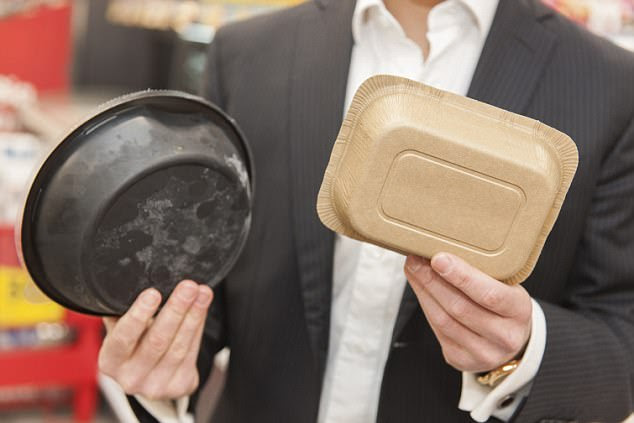
     
    Iceland Managing director Richard Walker holds the current plastic tray (left) and the new wood pulp tray (right) 
     
    Iceland's landmark move puts pressure on its rivals to follow suit amid public demands to turn back the tide of plastic pollution
    ICELAND's landmark move puts pressure on its rivals to follow suit amid public demands to turn back the tide of plastic pollution. ICELAND cannot dictate the packaging used by the big food brands it stocks, but it will encourage them to switch away from plastic.
    Recently, some of retail's biggest figures, including former bosses of Tesco, Marks & Spencer, Asda and Debenhams, signed a statement calling for an end to throwaway plastic packaging. They said: 'Over the past decade Britain's retailers have in the main focused on recycling in a bid to reduce the environmental impact of the plastic waste they produce.
    'But we have to accept that this isn't enough – by recycling plastic, we are merely recycling the problem. It is therefore essential that retailers and packaging manufacturers work together to turn off the tap of throwaway packaging.'
     
    Iceland own branded burgers are put into a plastic bag and then inside a cardboard box. In future, the bag will be removed and they will go straight in the box
    ICELAND own branded burgers are put into a plastic bag and then inside a cardboard box. In future, the bag will be removed and they will go straight in the box
     
    Greenpeace executive director John Sauven last night congratulated ICELAND on 'its bold pledge', adding: 'It's now up to other retailers and food producers to respond to that challenge.
    'The tidal wave of plastic pollution will only start to recede when they turn off the tap. They know the scale of systemic change we need, and yet their responses have been timid and piecemeal. Iceland has offered a more radical solution that shows the way forward for the sector.' 
     
    Now all we have to do is convince all the other supermarket giants of the western world to reduce or eliminate plastic packaging like this brave British company. Easy, huh?

    Monday, January 15, 2018

    A Pile Of Trash In The Ocean Has Grown To The Size Of France

    The Great Pacific garbage patch is a collection of marine debris in the North Pacific Ocean. And now it’s the size of the entire country of France/State of Texas. While this isn’t the only ocean garbage patch, it’s by far the largest. It’s one of the strongest examples of how waste is destroying the world.

    It’s also referred to as the Pacific trash vortex, and it’s actually 2 distinct collections of debris bound together by the North Pacific Subtropical Gyre. The ocean’s currents form the Great Pacific garbage patch, binding together waste from the east and west. Most of the patch’s debris is plastic. And since most plastic isn’t biodegradable, it doesn’t disintegrate. Instead, it just breaks down into smaller pieces called microplastics. But there are also larger plastics, which are mainly refuse from land activities.
    Scientists haven’t conducted detailed research into what percentages of the garbage patch come from which source. A 2014 study sampled 1571 locations from a range of garbage patches, not just the Great Pacific one, and it concluded that more than 60% of the waste is made up of buoys, lines and nets from fishing ships. Though the study researched over 1000 locations, this report can’t be considered comprehensive. For example, in 2011 the EPA published a contradictory report that concluded that the majority of the Great Pacific garbage patch is made up of domestic trash and manufactured products. This report also stated that the source of the trash comes from the land, via marinas, ports, rivers, storm drains and other sources.

    Humans have known about the the Great pacific garbage patch since 1988. However, its scale wasn’t’ first comprehended, and it has grown since. The first person to inform the world of its true scale was an oceanographer and race boat captain named Charles J. Moore, who encountered it personally when taking part in the Transpacific Yacht Race.
    Though it’s huge and causing extreme damage to the environment, the Great Pacific garbage patch isn’t easily visible from the surface. The exceptionally small pieces of broken down plastic are nearly invisible to the eye. There are ways of estimating just how much plastic has been wasted, though. One of the most recent studies confidently predicted that over half of the world’s plastic produced since 1950 is now in the oceans. From 1950 to now, humanity has produced 9.1 billion tons of plastic. 7 billion tons of this are no longer being used. Only 9% of this discarded plastic got recycled and 12% got incinerated. Therefore, 5.5 billion tons went into the oceans or land.
    One of the worst effects of marine debris is “ghost fishing,” which is when discarded nets end up catching and suffocating other marine life. Marine garbage patches can also prevent algae and plankton from receiving enough sunlight to create nutrients. Algae and plankton use photosynthesis to make nutrients, so when a garbage patch blocks the sun the entire food chain is threatened. Another way that plastic is poisoning the world’s oceans, is that the plastics that are degradable leave a range of toxic chemicals in the water, damaging marine life, which includes the fish that we eat.

    Additionally, small pieces of non-degradable plastic have already been discovered in the stomachs of sea creatures, such as turtles and albatrosses. In a study of albatrosses in Hawaii, biologists discovered that one third of albatross chicks are dying because their parents are inadvertently feeding them plastic from the ocean. To date, research has documented 267 global species that are harmed by ocean plastic pollution. However, the true number of affected animals is definitely much higher and continues to grow.

    If you’re wondering how the ocean’s plastic will end up in humans, there is already one well documented pathway. The food chain goes like this: jellyfish often accidentally eat plastic pieces, fish eat the contaminated jellyfish and humans eat the plastic filled fish. This problem is only going to get worse The UN ocean conference predicted that the ocean will contain more plastic than fish by 2050.
      
    While many organizations are committed to prevent the patch from growing, being aware of and lowering your plastic usage would help a lot.
    Jenny the Crusader' loyal Knight ----Jonny  C.

    Saturday, January 13, 2018

    Global Warming Facts For Kids

    Now is the right time to discover the most important global warming facts for kids. The release of carbon dioxide together with other heat-trapping gases (like carbon dioxide and methane) into the earth’s atmosphere gives rise to a phenomenon known as global warming. It so happens that the gases absorb the sun’s heat thereby acting like a dense cloud, leaving the planet warmer. The thick blanket of these gases is created by the burning of fossil fuels in power plants and in our cars.

    The most important greenhouse gas is CO2 which is discharged when fossil fuels like petrol, oil, and coal are burnt or when trees are felled or burnt. Most of the methane derives from the livestock for food.

    Solar radiation reaches the earth from the sun and is absorbed by the surface of the earth. The radiation which the earth’s surface releases is in turn absorbed by the greenhouse gases in the atmosphere.

    There is clear evidence that the earth’s temperature is on the rise and the atmosphere is getting warmer. In the last hundred years, the global average temperature has risen by 0.6o C.

    The year 1998 is believed to be the warmest year, while the 1990’s the warmest decade ever recorded in the history of 1,000 years.

    The increase in temperature causes ice to melt at a much faster rate. Since 1970’s, the Arctic ocean has thinned by about 40% and chances are that several ice sheets in the Antarctic are likely to disintegrate.

    Scientists claim that in the last 100 years the sea level has risen by 10 – 20 cm globally.

    The coral reefs in the Indian Ocean are most likely die out due to extreme water temperatures.

    A Glacier Calves near Yakutat

    With the passage of time, the rapid change in climate turns out to be a major challenge for all of us in near future. The effect of this warming is growing to nearly unmanageable proportions, ranging from rising sea levels to the increasing risk of catastrophic flooding.

    Global warming continues to become a serious and unprecedented issue as it can lead to simple drought situation, rapid change in climate, melting glaciers, and even dissemination of diseases.

    The increasing global warming poses a significant risk on poverty reduction and is likely to undo the decades of development efforts. It goes without saying that the issue is global but the negative effects are more obvious in the poor people in under developed countries.

    One of the major causes of global warming is the widespread deforestation which, if not addressed on time, might go out of the hands of the individuals concerned.

    It seems likely that the level of CO2 will double by the year 2100.

    Global warming has also affected the wildlife so much so that the ecosystems responsible for maintaining balance in respect to the local climate ranging from frozen Arctic tundra and hot dry desert in the tropics.

    There was too little oxygen content in the earth’s atmosphere when the earth was born, perhaps less than 1% oxygen pressure.

    During previous 100 years, the temperature of the sea waters mounted and the glaciers thawed out thereby causing the level of the seas all over the world to mount for almost four to ten inches. It all happens due to global warming.

    The consequences of global warming can be extremely terrible. As the temperatures get higher, it results in famine and causing floods to annihilate plant life and natural world including people.

    One of the adverse effects of global warming has already had its impact as the golden toads have become extinct from Costa Rica due to the climatic changes, according to World Wildlife Fund.

    The glacier of Greenland named as ‘Ilulissat’, is being thawed out and going in sea waters more rapidly.

    This is all because of global warming.
    If the temperature of the world increases continually, it will give birth to harmful diseases in our planet.

    These diseases will multiply quite easily due to global warming as the coldness of the temperature will not destroy them.

    By the year 2040, the entire polar region of Arctic will become iceless for about 90 days in every 365 days because of increasing temperatures.

    To the youths of today , we are  leaders in the future  learn as much as possible  about Global Warming  so you can teach your parents and other grown ups , most of them is in denial .
    Jenny  the  Crusader