Monday, July 15, 2019

The Earth has a big 'To Do' list

See the source image
 
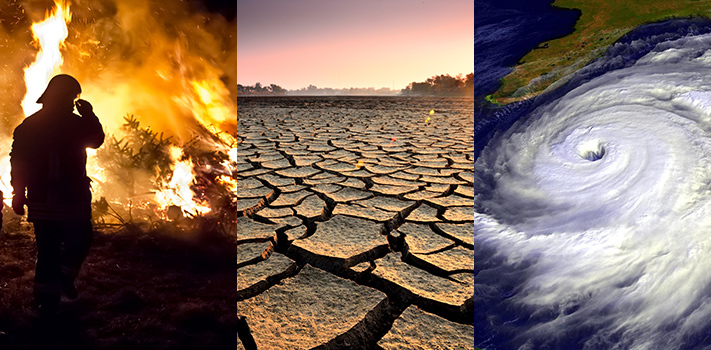
Since the end of the last ice age, humans have developed tools and machines and have modified the land for agriculture and long-term settlement. As the population has grown and new technologies have spread across cultures and continents, more and more of the planet’s resources have been pressed into serving the species. In the process, human activities have disrupted the natural order of the environment by depopulating and eliminating species and adding harmful chemicals to the air, water, and soil—activities that are changing the climate and the structure and function of ecosystems, as well as the biological communities they contain. Solving the critical environmental problems of global warming, water scarcity, pollution, and biodiversity loss are perhaps the greatest challenges of the 21st century. Will we rise to meet them?
 
 GLOBAL WARMING
Collectively, the weight of human beings and their activities are changing the face of Earth. The lights of cities can be seen from orbit; large areas that were once forests, wetlands, and grasslands have been transformed into agricultural land; and the gases produced by vehicles and other machines are slowly altering the planet’s atmosphere, by adding chemicals that strengthen the atmosphere’s ability to trap heat energy. By the end of the 20th century, greenhouse gas emissions from human activities had become so great that they had begun to influence temperature and precipitation patterns, and scientists and other experts began to worry how these changes would affect natural ecosystems, the reliability of crop production, and our future way of life.
 
BIODIVERSITY
Each organism on Earth represents the successful lines of millenia of natural selection, and each species fills specific roles in the ecosystems it inhabits and shapes. We still rely directly on many wild plants and animals for food, and many have been the source of important pharmaceuticals or the inspiration for technological breakthroughs. Beyond their economic value to humans, plants and animals bring us joy and enrichment in their beauty and novelty. Our lives would certainly be less beautiful and interesting without songbirds, majestic giraffes, wildflowers, thrilling sharks, or life and oxygen producing rainforests, wouldn’t they?
While organisms have always come and gone over the course of our planet’s history, modern biodiversity loss is human-caused and extinctions are occurring about 1,000 times faster than natural rates. Animals from whales to bees, and plants of all shapes and sizes are threatened by human development, overexploitation, pollution, and global warming. We have permanently lost so many unique and fascinating organisms, and many others are teetering at the brink of extinction. The to-do list for protecting our precious biodiversity is long, but international agreements, nature preserves, and action to halt poaching and other forms of overexploitation are already making an impact.

WATER CRISIS
Water is essential to life. Less than 1% of Earth’s water is usable fresh water. Unlimited access
to clean, safe water is taken for granted in many places, but water scarcity is a growing concern worldwide. Overuse, increasing demand, pollution, poor management, lack of infrastructure, and changes in weather patterns due to global warming are key stressors that affect the availability of fresh water. Many major cities across the globe are at risk of a water crisis, and water stress is projected to increase in most countries in the coming decades, threatening regional stability and raising the possibility of forced migrations. In addition, the issue of water availability is not just a human problem—our demands on lakes, rivers, and streams can dramatically harm ecosystems and the natural processes that require water.
Water scarcity is a growing concern worldwide. Unsustainable and ever-growing demands on our freshwater resources have taxed aquifers and surface waters in many places, harming ecosystems and threatening future economic growth. A regional water crisis, often triggered by drought, can result in famine, forced migration, and other humanitarian emergencies.

THE EARTH HAS A BIG 'TO DO LIST' AND ONLY ABOUT A DOZEN YEARS TO ACCOMPLISH IT.
It requires a complete change of attitude and a lifestyle change. During the war years our grandparents learned to ration food, clothes and necessities of life. They survived quite well and we need to adopt that kind of attitude now.
Conserve water and energy as much as possible. Don't take long road trips unless you have to. Use public transit whenever it's possible. Recycle or re-use everything you can.  Do community service like volunteering to clean up litter or plant trees. Pass on climate information to others. And most important …. lobby or petition your state and federal governments to join the rest of the world in coming to a concrete agreement on how we will slow global warming and stop the climate from changing. It's essential that we join hands around the world and make this our global priority.


Sunday, July 14, 2019

Trump environment speech: As the president touts his record, here's what his administration has done

The Trump administration has worked to repeal more than 80 environmental regulations, while installing former fossil fuel lobbyists in key positions in government
Clark Mindock New York ⦁ @ClarkMindock Donald Trump, who once mocked the very idea of global climate change, is set to deliver a speech touting his record on the environment, and the supposed leadership America has had on that issue during his presidency.

The speech comes amid a massive rollback of environmentalregulations, with more than 80 protections slashed in the two years since Mr Trump took office.

In addition, the president has installed climate change deniers and oil and gas industry allies in the top echelons of his government. That includes climate change denier William Happer, of the White House’s National Security Council, as well as cabinet members like interior secretary David Bernhardt, whose previous work included lobbying on behalf of fossil fuel companies. Andrew Wheeler, the current chief of the Environmental Protection Agency, also worked for fossil fuel interests before joining the Trump administration.
          The speech will “recognise his administration’s environmental leadership and America’s     role in leading the world,” a White House official told The Guardian during a preview of the address last week.

The official said that Mr Trump plans to tout America’s clean air and water, in spite of the country’s mediocre record on the issue compared to other major countries. 

            So, as the president prepares to deliver his speech, here are some key things to keep in mind:

The Trump administration has rolled back 83 environmental rules since January 2017. An analysis by the New York Times found that a total of 22 of those rollbacks target air pollution and emissions rules, and 18 target oil and gas drilling or extraction rules. Meanwhile, another 13 have to do with infrastructure, 10 concern animals, five have to do with toxic substances, and relate to water pollution. There are eight other regulations that have been targeted.

While Mr Trump and his administration have touted America’s water and air as some of the cleanest in the world, the US actually ranks 37th dirtiest on that scale out of 195 countries for ozone, or smog. That’s according to the nonprofit Health Effects Institute’s State of Global Air report form 2019.


During the first two years of Mr Trump’s presidency, according to the Associated Press, the US had more days of unhealthy air than during the final four years of Barack Obama’s presidency. 

Donald Trump's nominee for UN ambassador Kelly Craft publicly contradicts his stance on climate change

The Trump administration has embarked on an effort to significantly change the rule defining which wetlands and waterways get Clean Water Act protections — also known as the waters of the US rule. The changes would erase protections for 51 per cent of wetlands, and 18 per cent of streams that don’t have relatively permanent surface water connection to nearby waterways, according to an analysis by the US Geological Survey. That could have a significant impact for wetlands, which are protected waterways because they are important pollution filters, wildlife habitats and storm water buffers.

The Trump administration has pushed to repeal the Clean Power Plan, the Obama-era energy regulations that sought to reduce greenhouse gas emissions from power plants. The Trump administration has introduced its own rule to replace it — the Affordable Clean Energy rule — that would still reduce greenhouse gas emissions compared to doing nothing, but the US Environmental Protection Agency itself estimates that there would be 1,400 more deaths each year from environmental quality issues compared to the previous rule.

The Trump administration has begun the process — or at least claimed to have started the process — of pulling the United States out of the Paris Climate Accord, the landmark international climate agreement that Barack Obama had put significant effort into developing. If the US is successful in pulling out of the deal, it could leave the country as the only nation in the world not party to it (Nicaragua and Syria, the two holdouts previously, have both signalled their intention to join).

Since January 2017, Mr Trump and his administration have pushed forward with offshore drilling leasing, and regulations rollbacks, including efforts to reduce safety regulations that were put into place after the Deepwater Horizon oil disaster. Mr Trump has also overseen efforts to expand drilling in the Arctic, and to open up areas of US coastline for offshore drilling that have never been open to that drilling before, including off the Atlantic coast and off of the coast of Florida.

Meanwhile, the administration has pushed forward with plans to open up large swaths of land in the US to drilling. More than 1.5 million acres were leased for drilling last year alone, including in portions of the US that are seen as integral to US wildlife management, areas that are considered national treasures, and areas of historical significance to Native Americans.
⦁
The Trump administration has embarked on an effort to clean up marine debris, much of that coming from Asia.

The Trump administration has helped to secure funding to restore the Florida Everglades, which are severely threatened by climate change and could put nearby communities like Miami in great danger as sea levels rise.

Thank Clark Mindock
Knight Jonny

Wednesday, July 10, 2019

Friday, July 5, 2019

Why should we care about climate change? ...Take a look at Alaska


A new record high temperature has been set in the US state of Alaska, part of which lies inside the Arctic Circle. A temperature of 90F (32C) was reached at Anchorage airport on Thursday, the US Weather Service tweeted.
The previous high was just under 30C, and the average at this time of year is 18C.
Alaska had earlier broken records throughout a hot spring, particularly in the Arctic zone which is especially sensitive to fluctuations in climate.
 
Twitter post by @NWS: Several locations through southern Alaska saw their single hottest day on record yesterday, and daily record high temperatures are expected there again today.

The dramatic warming Alaska has experienced in recent years is linked partly to a decline in sea ice and Arctic Ocean warming. This has wreaked havoc on local communities, wildlife and the state's economy.
Climate change played a role in the deaths of thousands of puffins in Alaska, scientists said in May.
They said they believed the birds had starved to death when the fish they eat migrated north with rising sea temperatures.

Thursday, June 27, 2019

Record breaking CO2 level continues to rise

 
Earth as viewed from the Lunar Reconnaissance Orbiter.
 
The rapid rise continues, relentlessly. The Scripps Institution of Oceanography and the National Oceanic and Atmospheric Administration (NOAA) announced Tuesday that the average carbon dioxide concentration in the atmosphere during May rounded to 414.8 parts per million, or ppm — the highest monthly number on record and the peak of 2019. While Earth's CO2 trend has been skyrocketing overall — compared to both geologic and historic levels — each year the potent greenhouse gas wavers down during the warm growing season, when flourishing trees and plants in the Northern Hemisphere temporarily soak up CO2 from the air (this ever-rising, though saw-like line is called the Keeling Curve).
But 414.8 ppm, while the highest monthly CO2 level in recorded history, is not the only number that's critical to appreciate. The other is 3.5 ppm. That, noted Scripps, is the leap in CO2 ppm since last May. It's the second highest year-to-year jump on record, and smashes average CO2 increases from earlier decades. After the Scripps monitoring station atop Hawaii's towering Mauna Loa went online in 1959, CO2 rose around just 0.7 ppm per year in the early decades of operation. Then, in the 1990s, the rate increased to 1.5 ppm per year. The last decade has averaged 2.2 ppm.
Yet, in the last year, it was a 3.5 ppm gain. Concentrations of the planet's most influential greenhouse gas are accelerating.
"It's extremely alarming to see atmospheric CO2 continuing to increase relentlessly year after year when all scenarios that lead to a stable climate require that it go down," said Sarah Green, an environmental chemist at Michigan Technological University.
 
The saw-like  line of the rising CO2 curve.

"The further we go into the uncharted climate territory of unprecedented CO2 levels, the more likely we are to encounter surprises," added Green, referencing the extreme weather and climate disruptions wrought by such warming. "We are heading toward the part of the climate map labeled 'here there be dragons' and rather than turning around, or even slowing down, we are running faster."
On Earth, climate scientists globally are well aware that the climate has naturally changed before, as CO2 levels have fluctuated over hundreds of thousands of years. But the current rate of change has no precedent, in at least some 800,000 to a million years.
"When I think of the Keeling curve, I see it as the most important confirmation that the rate of the rise in CO2 (or the pace of CO2 increase) is like nothing we have ever seen before and probably like nothing the planet has ever seen before, certainly in the last million years and possibly ever," said Kris Karnauskas, an associate professor in the Department of Atmospheric and Oceanic Sciences at the University of Colorado Boulder.
 
Skyrocketing CO2.
 
Today's CO2 measurements, like the Scripps' measurements taken atop Mauna Loa and other stations around the globe, are direct, incontrovertible proof that the planet is experiencing profound atmospheric changes.
"These are measurements of the real atmosphere," Pieter Tans, a senior scientist with NOAA’s Global Monitoring Division, said in a statement. "They do not depend on any models, but they help us verify climate model projections, which if anything, have underestimated the rapid pace of climate change being observed."
  
Although these CO2 numbers are stark, they're even more striking when put into context with observable changes around the rest of the world. In real time, scientists are seeing unprecedented disappearances of Arctic ice, vanishing mountain glaciers, a surge of large, destructive wildfires, and continually warming seas.
"We still need to remember that the story isn't built on a single number," emphasized Green. "The full story of the climate crisis, which is even more alarming, is built from many, many data points on global emissions, ocean heat, Arctic warming, deforestation, and many other metrics."

Tuesday, June 25, 2019