Monday, October 31, 2016

Before the Flood .... a must watch


From filmmaker Fisher Stevens, Leonardo DiCaprio travels the world speaking to scientists and world leaders about the dramatic effects of climate change.


Please watch
It is so important

Saturday, October 29, 2016

The amazing creatures of the world’s newest marine protected area in Antarctica


A foraging Emperor penguin preens on snow-covered sea ice around the base of the active volcano Mount Erebus, near McMurdo Station, the largest U.S. Science base in Antarctica, December 9, 2006.

After five years of debate, the Ross Sea has been declared a “marine protected area.”
The southern most ocean in the world is considered the last true wilderness left on Earth. Its waters are relatively untouched by pollution and climate change, and most of its native animals still live as they would have hundreds of years ago. Each species has a relatively small population and needs to be protected before they join the legions of  species who have disappeared from earth, in the last forty years.
The declaration was made by the Commission for the Conservation of Antarctic Marine Living Resources, which consists of 24 countries .
No one actually owns the Antarctic continent, but all countries are welcome to conduct scientific experiments there. Many countries would like to own a slice of the continent which makes up 10% of the earth's land mass. Many would like to exploit it's natural resources, off-shore oil drilling, commercial fishing, perhaps mining for minerals, even drilling wells to harvest mineral waters, which are highly commercial. The ice crust is between three to five kilometers thick making any form of mining difficult with our present technology.


A leopard seal is seen in the port of Talcahuano near Concepcion city, some 500 km (311 miles) south of Santiago, August 24, 2012. The leopard seal from Antarctica was brought to a rescue center for marine animals after she was found injured, presumably hit by a small boat.
A leopard seal is seen in the port of Talcahuano near Concepcion city, some 500 km (311 miles) south of Santiago. The leopard seal from Antarctica was brought to a rescue center for marine animals after she was found injured, presumably hit by a small boat.


Like a protected land reserve, this decree will ensure there will be no form of fishing or mining in the 600,000 sq miles that comprise the Ross Sea (though some regulated amount of toothfish catching will be allowed).
Though Ross Sea takes up only 2% of the Southern Ocean, it is home to nearly a third of all Adelie penguins, a third of all Antarctic petrels, and 6% of the world’s Antarctic minke whale.


Dwarf minke whale Great Barrier Reef. Pacific Ocean.
 
One reason for the bounty of wildlife is that ocean currents cause an upwelling of nutrients, making the sea a prime feeding ground.
The proposal succeeded in no small part due to the work of Lewis Pugh, the UN Patron for the Oceans, who undertook a series of death-defying swims in the freezing Antarctic waters to raise awareness of the amazing species that exist in and around the Ross Sea.


map-antarctica-ross-ice-shelf-red-x

A Weddell seal lies on a beach on Lagoon Island on the Antarctic Peninsula January 14, 2009. A group of elephant seals lolling by a damaged wooden hut in Antarctica vastly complicated simple repairs on Wednesday, a sign of extra hazards to people on the frozen continent. Picture taken January 14, 2009.
A Weddell seal lies on a beach on Lagoon Island on the Antarctic Peninsula January 14, 2009. A group of elephant seals lolling by a damaged wooden hut in Antarctica vastly complicated simple repairs on Wednesday, a sign of extra hazards to people on the frozen continent.

A seagull perches on a pier as two Falkland Skua birds fly away in Port Stanley, March 14, 2012. 
A seagull perches on a pier as two Falkland Skua birds fly away in Port Stanley

A colony of Adelie penguins settled on a rocky spur above ice melt pools gather in front of the Ross Sea ice shelf in Antarctica January 27. Scientists warned on Wednesday that the Antarctic ice shelf was in danger of melting due to global warming and warned sea global levels could rise up to six metres within one full generation. Ministers and senior officials from 24 nations gathered on the vast frozen Antarctic wastes, issuing an impassioned plea to safeguard the world's last true wilderness.

A Petrel flies over the Antarctic ocean.
A petral , a species on the endangered list

Up to now, science has been king, thanks to the Antarctic Treaty of 1959, a highly successful international agreement concluded by 12 scientifically active nations -- Argentina, Australia, Belgium, Chile, France, Japan, New Zealand, Norway, South Africa, Soviet Union, United Kingdom, and the United States. Thirty-nine other nations now participate and 25 of these have active scientific research projects.

The Antarctic Treaty grew from the International Geophysical Year (IGY) of 1957-58, a scientific assault on the Antarctic, and called for scientific cooperation in the area south of latitude 60 degrees. 
It froze territorial claims, banned all military activity and weapons testing, and established Antarctica as off limits to nuclear explosions and the disposal of
radioactive waste.  It provided all nations freedom of scientific inquiry but obligated them to share the results.  The question of resources was avoided in 1959, but since that time two additional treaties protect seals and marine living resources and regulate possible minerals development.

But the future of the continent is anybody's guess. The world thirst for oil, gas, and other minerals will probably determine it's future, even though today's recovery technology seems inadequate.
The scientific community feels that the fragile environment would not survive massive commercial enterprises carried on down there but when has that stopped us? Anything negatively affecting Antarctica will have very negative consequences on the entire world regarding global warming and climate change.
Lewis Pugh may not be able to hold back the entire world of entrepreneurs who wish to lay waste to this last untouched habitat forever. One hundred countries are presently challenging the protective treaties. But right now he is my number one hero.

Friday, October 28, 2016

More Trumpage - "Climate Change was created by the Chinese" ..... Oh yeah?? Keep scrolling down the blog


Then Trumpet mouth denies what he said when Hillary spoke of it during the debate


Have you Ever Seen the Rain


You think what you can't see can't hurt you ?? .... Well take a look *


Mexico City, Mexico is one of the most heavily populated cities in the Western Hemisphere. The city is extremely cramped and dirty.  Human waste  pollutes the waterways, Garbage dumps grow into mountains and the haze in the air is mainly from cars without carbon emission controls.

effects of humans
 Extreme drought and starvation in Africa is decimating the wildlife and human population

effects of humans
Here you can see a coal power plant in the United Kingdom billowing plumes of greenhouse gases into the atmosphere.

effects of humans
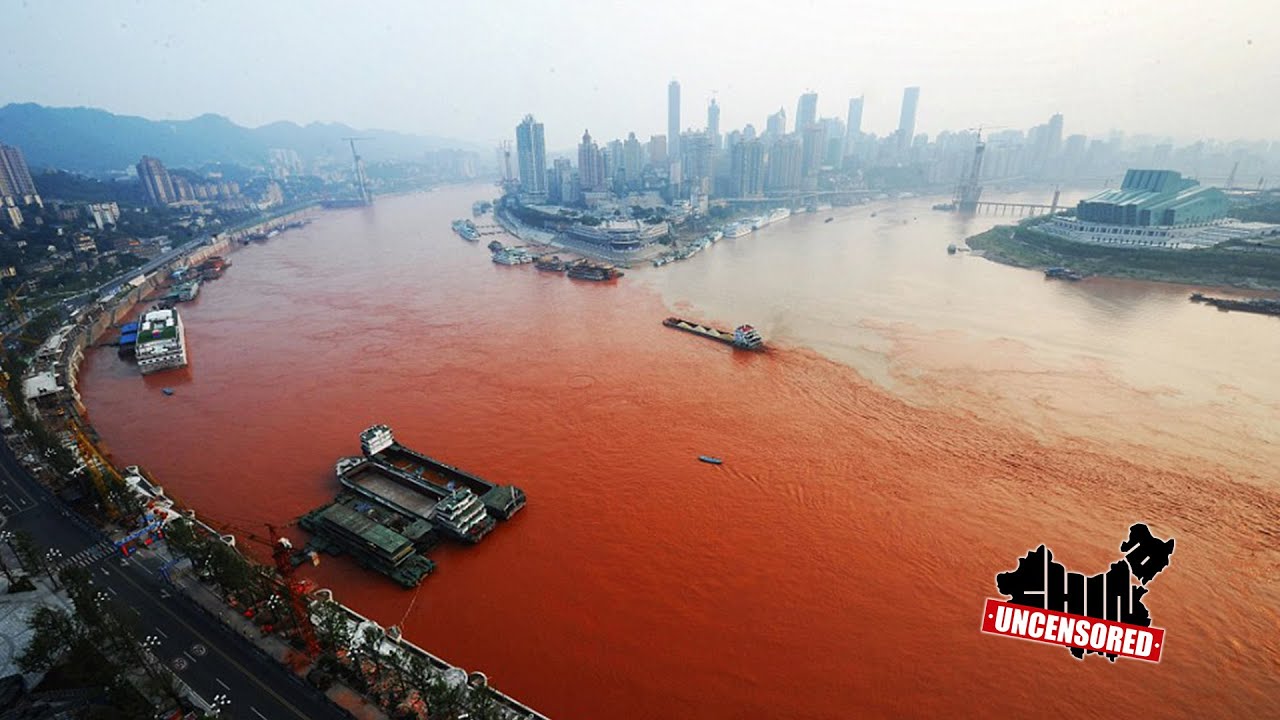
China’s Yellow River has been deemed unsafe for use of any sort of use because of its extremely high levels of pollution and human waste. Discharge from factories along the river has this man turning away in disgust.

effects of humans
Ghoramara Island in West Bengal, India has been experiencing severe sea level rises because of the effects of global warming. Since the 1980’s, more than 50% of the land has been washed away.

effects of humans
This image shows the Mir Mine, the world’s largest diamond mine, in Russia, larger than the town which surrounds it. Diamond mining is devastating for the land, as this photo illustrates perfectly, Leaving a manmade scar that can be seen from space.

effects of humans
Residents of West Bengal, India face water shortages because of intense droughts, often followed by intense floods. They suffer every extreme of climate change including more and more powerful typhoons.

effects of humans
This photo is of the Willamette National Forest in Oregon, or what’s left of it. The forest was destroyed and levelled to build a reservoir


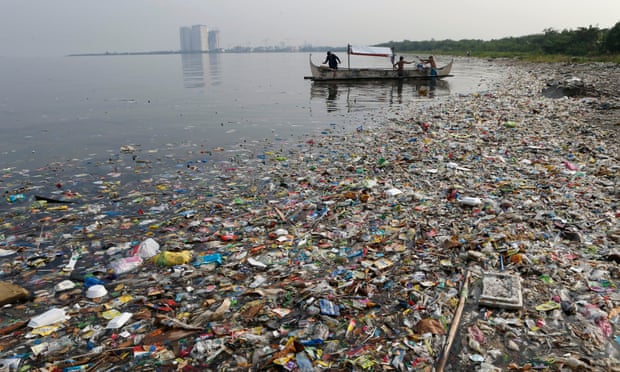
Manila Bay in the Philippines

Image result for images of the damage man has caused to earth
Acid rain caused by pollution kills forests

This bird died from eating tiny bits of brightly colored plastic which it mistook for food. The bird is decomposing but the plastic will never decompose and may become a meal for another bird.
Image result for images of the damage man has caused to earth
At the current rate of deforestation, all the rain forests will be gone in less than 100 years

Image result for images of pollution in china
 Water pollution in China has reached critical levels

Air pollution in Beijing 

Image result for images of pollution in china 
Air apocalypse in China
 
Now for something I cannot show you. Did you know that over fifty percent of all wildlife on earth has disappeared in the last forty years??


The greatest wildlife loss affecting our food supply is the honey bee. 

Image result for images of bees

We lose about 30% of the bee population a year now
Bee researchers first reported massive die-offs back in the 1990s caused mainly by insecticides on crops, loss of habitat, lack of nutrition and the effects of global warming. But the plight of the honeybee didn’t truly buzz into the national consciousness until the spring of 2013, when data revealed the average beekeeper had lost 45% of their colonies the previous winter to a mysterious phenomenon known as colony collapse disorder. Bees pollinate two thirds of our food crops and without them
we would  have world starvation in a very short time.
A wise man once said

Image result for images of the damage man has caused to earth


SOOO what's the good news?
Danged if I know.
People of Earth...Wise up!

Saturday, October 22, 2016