By Mark Tutton, CNN (CNN)Greta Thunberg is just 16 years old, and she's already a bona fide climate action rockstar. Today she was the inspiration for youth climate protests that took place in more than 100 cities worldwide. Last August, Thunberg began staging weekly sit-ins outside the Swedish Parliament every Friday. Her actions have spurred students around the world to skip school on Fridays to hold their own climate strikes. See how youth climate strikes unfolded This morning, Thunberg was among the protestors in Stockholm, Sweden. She told CNN's Atika Shubert that despite a spate of global student protests, we have yet to see meaningful action on tackling climate change. "The most important thing to look at is if emissions are increasing or reducing -- and they're increasing," she said. Straight-talking Thunberg has won fans of all ages for her single-minded determination and her straight-talking when speaking to the powerful. At last year's UN climate talks she told international climate change negotiators, "You are not mature enough to tell it like is. Even that burden you leave to us children. " At this year's meeting of the World Economic Forum, in Davos, Switzerland, Thunberg gave a memorable speech at a lunch with guests that included music stars Bono and Will.i.am, Salesforce CEO Marc Benioff, former Goldman Sachs President Gary Cohn, and an array of bankers and investors. Meet 16-year-old climate activist Greta Thunberg Meet 16-year-old climate activist Greta Thunberg 02:18 She accused some of them of putting profits before the planet, so they could continue to make "unimaginable amounts of money." She is now something of a celebrity and a favorite subject for media interviews. It's something Thunberg has had to get used to. "I did this because I was shy," she said. "I'm very bad at socializing." But she wanted to make a point: "No one is too small to make a difference." Thunberg lives by her ideals. She no longer travels by plane and she eats a vegan diet. She's made her parents do the same. And she has this advice for other young protestors, who today gathered in countries from Italy to Israel, and Nigeria to Japan. "I think we should continue until they do something," she said.
"This is not a one-time thing. We are not just protesting to let them see that we care, we are protesting until they do something. We are going to put pressure on them and just keep on going." Thanx Mark Tutton ---CNN Knight Man
Ever since the Mariner 4 probe made the first successful visit to the Red Planet - a flyby in July 1965 - we've sent a succession of missions that have given us all sorts of fascinating information about Earth's near neighbour - but not the answer to the only question that really matters.
So, take a look at the technology that may finally change the game.
This is the Analytical Laboratory Drawer, or ALD - a sophisticated three-in-one box of instruments that will examine rock samples for the chemical fingerprints of biology. On Thursday, it was gently lifted by crane and lowered into the ExoMars "Rosalind Franklin" rover, the six-wheeled buggy that will carry it across the Oxia plain of Mars in 2021.
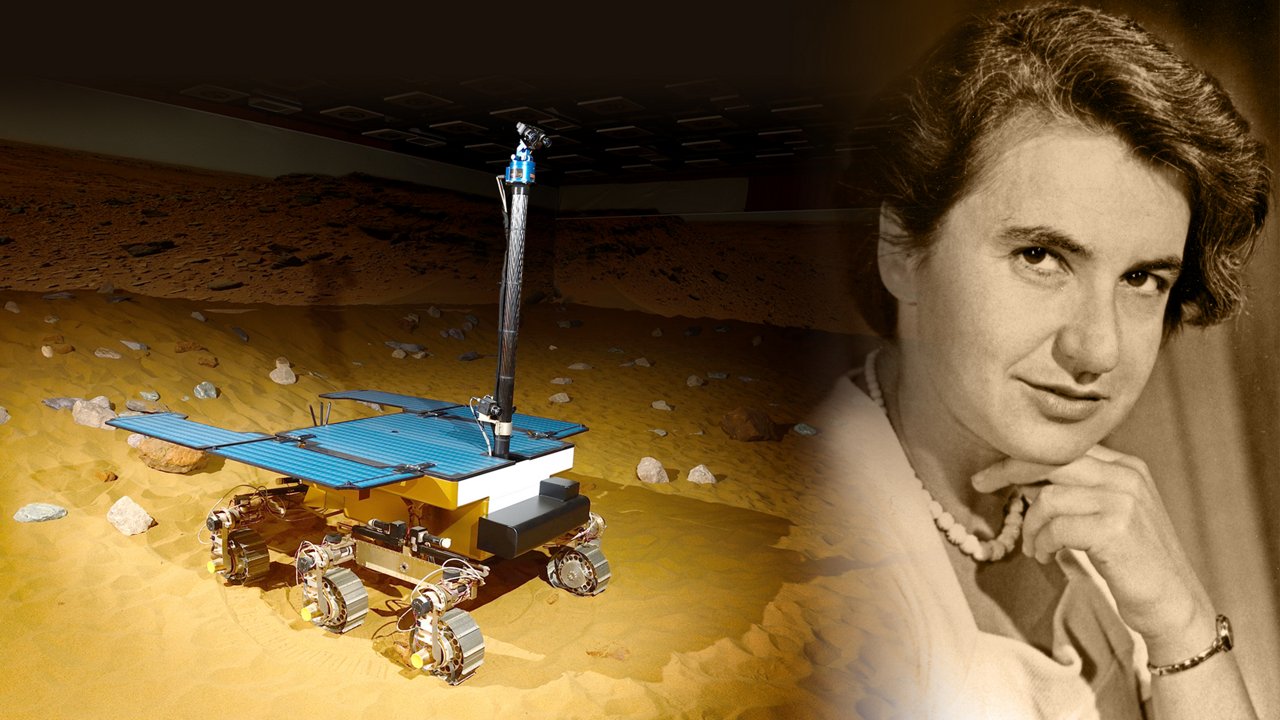
Rosalind Franklin Rover and the scientist it was named after
The 300kg robot, which is being developed jointly by the European and Russian space agencies, will have a drill that can dig up to 2m below the planet's dusty surface. The tailings pulled up by this tool will be handed through a door to the ALD, where the various mechanisms inside will then crush and prepare powders that can be dropped into small cups for analysis.
It will be a forensic examination, looking at all aspects of the samples' composition.
All previous rovers have skirted the big question. They've essentially only asked whether the conditions on Mars today or in the past would have been favourable to life - if ever it had existed. They haven't actually had the necessary equipment to truly detect biomarkers. Rosalind Franklin will be different. Its 54kg ALD has been built specifically to look for those complex organic molecules that have their origin in life processes.
Thursday's integration was slow and deliberate, understandably: the ALD is in many ways the key element of the Rosalind Franklin mission.
"It is wonderful to see the heart of the rover has now been installed," said Sue Horne, the head of space exploration at the UK Space Agency.
"The Analytical Laboratory Drawer is the key location for Martian sample testing on the rover, allowing us to understand the geology and potentially to identify signatures of life of Mars. I can't wait to see what discoveries lie in store for this British-built rover."
Engineers at Airbus UK are now working three shifts a day to get the rover finished.
Although it doesn't look much like a vehicle at the moment, virtually all the components have now arrived at the Stevenage factory.
They're sitting on shelves around the edge of the cleanroom in bags, waiting their turn in the assembly sequence.
There are one or two outstanding items, however, including the rover's British "eyes".
This is the camera system, or PanCam, which will sit atop a mast and guide the robot on its trail of investigation.
"We've just held the delivery review board this week and PanCam should be coming to us in the next few days," said Chris Draper, the flight model operations manager at Airbus.
"We know everything will go together; that's the beauty of systems engineering. Every single part of the rover has been modelled in 3D, and everyone works to interface control drawings. Assuming we all do that then we know the ALD, for example, will fit perfectly into the rover."
The Stevenage team has a hard deadline of the beginning of August to get the finished Rosalind Franklin rover out the door.
Lift-off has to occur in July/August next year. This date is immoveable: you only go to Mars when it's aligned with Earth and the windows of opportunity have an interval of 26 months. If they miss the opportunity, they have to wait more than a year before they can try again.
Personally, I can't wait to hear what the scientists conclude from the research. Has there ever been life on Mars? What will it mean to us?
The Swedish teen who sparked a youth movement to combat climate change denounced the United Kingdom's parliament for its "beyond absurd" response to global warming. Greta Thunberg, who was nominated for the Nobel Peace Prize earlier this year for her advocacy, delivered the criticism while addressing members of parliament on Tuesday. “We probably don’t even have a future anymore,” Thunberg said at one point in her speech, according to Time Magazine. “That future was sold so that a small number of people could make unimaginable amounts of money. It was stolen from us every time you said that the sky was the limit, and that you only live once.” Thunberg also criticized the U.K. for its support of shale gas fracking and its expansion of North Sea oil and gas fields and and airports. She said that "this ongoing irresponsible behavior" would be "remembered in history as one of the greatest failures of humankind," BBC reported. Time Magazine added that Thunberg additionally slammed the government for discussing ways to lower emissions instead of eliminating them completely. "[It] is perhaps the greatest force behind the continuing business as usual,” she said. Thunberg, who founded the Youth Strike for Climate, gained increasing attention in recent months for her calls to demand that leaders enforce policies that combat climate change. She began her advocacy last year by handing out leaflets outside Swedish Parliament saying, “I am doing this because you adults are shitting on my future.” Her protests led to many students in different countries participating in protests to combat climate change. Students took part in protests in more than 1,500 cities around the world in a global demonstration on March 15. Thunberg was in the U.K. this week to participate in a protest organized by Extinction Rebellion in London, according to Time Magazine.
Crusader Jenny , Nanook . Knight Mika & Knight Moto
Canada: extreme floods show climate change effects first hand as experts warn of further extreme weather events.
Thousands are evacuated from eastern Canada as Justin Trudeau admits urgent action necessary to improve climate preparedness.
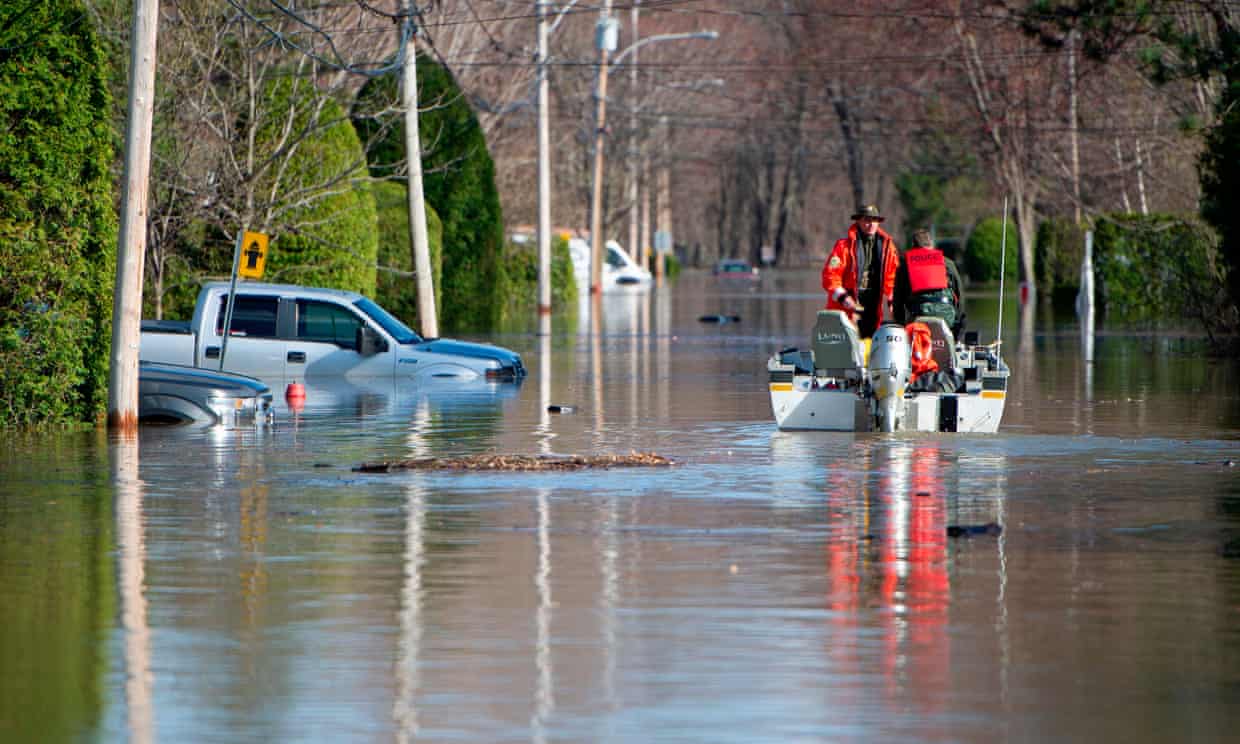
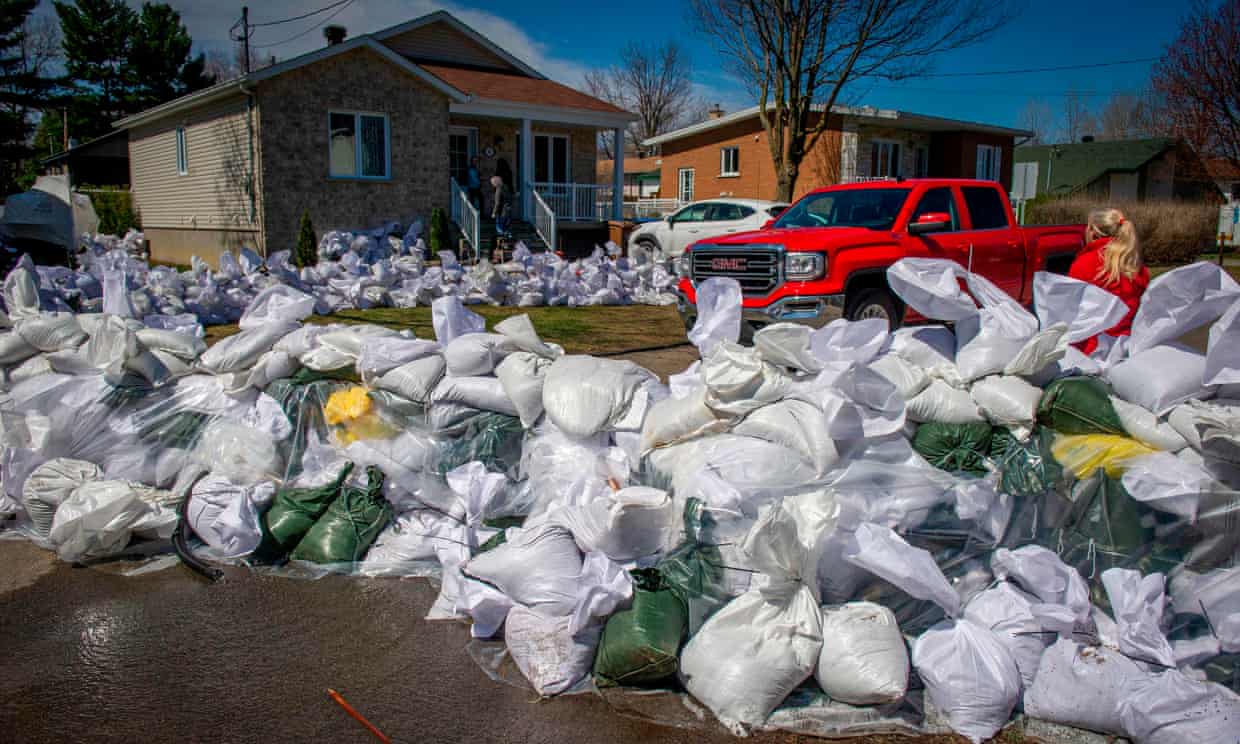
News footage showed people boating where they once walked, homes and cars filled with muddy water, volunteers searching for lost pets.Thousands of people in eastern Canada have been forced from their homes as heavy rains and meltwater cause unprecedented flood evacuations.
One of the worst-hit areas was a Montreal suburb where more than 6,000 people were evacuated after a dike burst on Sunday. A further 3,000 people were evacuated in other parts of Quebec, and in Ontario and New Brunswick, hundreds more are waiting out the floods in hotels and shelters.
“This year’s flooding is very extreme,” said Ursule Boyer-Villemaire, an associate professor at the Université du Québec à Montréal who specializes in disaster management and climate resilience planning.
Climate change means that catastrophic flooding will only become more common, but experts say the events of the past week highlight the fact that Canada has still not done enough to prepare for such disasters.
This is not the first time Quebec has seen large-scale flooding: in 2017, Quebec rivers reached similar levels.
The fact that two floods occurred so close together has climate preparedness experts concerned.
Rapid temperature increases in spring and huge variations in the amount of precipitation, two factors in the flooding, are related to climate change, said Laura Coristine, a biologist at the University of British Columbia.
But Canada has done little to prepare for flooding that is likely to become even more common as the planet continues to warm, she said. “Responding to disaster is going to be a lot more expensive than being proactive in vulnerable sites.” Ontario’s premier, Doug Ford, whose government has fought hard against the imposition of a country-wide carbon tax aimed at curbing emissions, toured flooded areas near the Ottawa River on Friday night. According to the Canadian Press, Ford did not explicitly mention climate change but did say “something is going on and we have to be conscious of it”
Students attend a climate change rally in Brattleboro, Vt. A new study shows that when children learn about climate change in school, their parents become more concerned about the issue. (Kristopher Radder / Brattleboro Reformer via Associated Press) You could say kids are taking the lead on climate change. Greta Thunberg, a 16-year-old Swedish activist and Nobel peace prize nominee, has barnstormed parliaments and United Nations meetings, calling on leaders to stop “behaving like children” and get serious about tackling climate change. Following Thunberg’s lead, thousands of students around the world have started skipping school on Fridays to protest climate inaction. And in June, a group of young Americans will face off against the U.S. government in a landmark trial aimed at spurring more aggressive efforts to cut greenhouse gas emissions. But kids can change the climate conversation at home too, according to a study published Monday in the journal Nature Climate Change. Researchers found that teaching children about climate change in school significantly increased their parents’ concern over the issue. Notably, the effect was strongest among conservative parents — who tended to be the least worried about global warming, and whose views have historically proven difficult to influence. Danielle Lawson, a social scientist at North Carolina State University and lead author of the study, said the results made her feel hopeful. “Not only are we teaching kids in a way that prepares them for the future — because they are going to have to deal with the brunt of climate change — but it continues to empower their efforts to help bring all of us together to work toward solutions,” she said. Previous experiments have shown that educating kids can spur changes in parents’ recycling habits and energy-saving behavior. Lawson and her colleagues wondered whether the same would apply for climate change. The researchers worked with 15 teachers as they taught nearly 250 middle school students in coastal North Carolina, which will face rising sea levels and stronger storms under climate change. In some of the classes, students worked on four activities centered on the connections between climate change and local wildlife. They also participated in a community-based project and conducted an interview with their parents about the changes in weather they had observed in their lifetimes. Middle school students in North Carolina sample phytoplankton as part of a lesson on climate change. Researchers found that when kids learned about climate change, their parents, particularly conservative ones, became more concerned about the issue. (Danielle Lawson) Students in the other classes did not receive the climate change curriculum, and they served as a control group. To see how attitudes changed as a result of the program, the researchers surveyed both students and parents at the beginning and the end of the 2016-17 and 2017-18 school years. They found that students who completed the climate change module became more concerned about the issue than their counterparts in the control group. On a 16-point scale, their concern rose by 2.78 points, compared to 0.72 points in the control group. The effect was even stronger among parents. Concern rose by rose 3.89 points for those whose kids learned about climate change in class, versus 1.37 points for parents whose kids did not. But the most striking thing about the new study was that the lessons had the biggest effect among conservative parents, whose concern increased by 4.77 points, said John Cook, a climate communication researcher at George Mason University who was not involved in the study. Surveys show that conservative Americas are least likely to be concerned about climate change, and efforts to sway them often backfire. That’s because people’s views are strongly shaped by group identity, particularly their political affiliation, Cook said: “If you change your mind on something where all of your tribe believes the same thing, you risk social alienation.” Letting kids lead the conversation seems to make the issue less polarizing, he said. Lawson said she thought that was because children don’t usually approach climate change from an ideological perspective. Another factor is “that unique relationship between a parent and their child, and this level of trust,” she said. The most famous example of this involved Bob Inglis, a Republican congressman from South Carolina. After Inglis’ college-age son took a course in environmental economics, he persuaded his father to reconsider his position. In 2009, Inglis broke ranks with his party and proposed a bill to help reduce carbon emissions. (He lost his reelection bid in 2010, partly as a result of his stance on climate change, and now works to promote free-market climate solutions).
Former Congressman Bob Inglis (R-S.C.) changed his views on climate change after discussing the issue with his son. (Sony Pictures Classics) The researchers also found that concern increased more than average among fathers. The same was true for parents of daughters. This could be due to the fact that, compared with boys, girls expressed greater worry about climate change after the lessons. Another possible factor is that during the middle school years, girls typically communicate better than boys, the study authors said. (For reasons that remain unclear, parents of daughters started out less concerned than parents of sons.) Experts said the program’s success had a lot to do with how teachers tackled climate change in the classroom. “Reading a textbook and completing a worksheet are unlikely to entice students to comment on their day at the dinner table,” Martha Monroe, an expert on environmental education at the University of Florida, observed in an essay that accompanied the study. Instead, Lawson and her team designed hands-on lessons focused on local issues. For example, one assignment involved monitoring the weather outside the school and comparing it with historical data for the region. The students’ projects mostly focused on North Carolina’s coast. Some students helped monitor sea turtle nests, since the gender of hatching eggs depends on temperature, while others helped build oyster reefs that can protect the shore from erosion and sea-level rise. Those activities may have translated into more parental engagement, Lawson said. “If you can get kids so excited and talking with their parents about what they are learning in schools, parents will want to learn.” The researchers wanted the interactions to arise organically, so the curriculum did not ask students to try to change their parents’ minds. “We do not want to put that burden on small shoulders,” she said. When teaching climate change, tackle the myths along with the facts, researchers say » Other educators are already using similar approaches in their climate lessons. “To me, the key thing is having them discover it on their own,” said Rebecca Brewer, a high school biology teacher in Troy, Mich. Every year, Brewer spends a week making imitation ice cores in her freezer, which her students cut up and measure while they study scientific data on past climate changes. “I’m not standing at the front of the room saying, ‘Climate change is real,’ ” she said. “You are going to examine the evidence and see for yourself.” Jeremy Cook, a biology teacher in Indianapolis, Ind., (not related to John Cook) has his students investigate how climate change is bringing more invasive species to the area. “I think that’s really eye-opening for them,” he said. “It’s not just about weather patterns changing.” Researchers and educators say these types of lessons are not about activism or advocacy. Teachers are simply giving students the facts. “We are not telling them what to think or what to say,” Lawson said.
Students in Germany skipped class May 3 to protest climate inaction as part of a worldwide movement. (Sascha Steinbach/EPA-EFE/REX) Even so, the classroom has become a battleground in the fight to sway public opinion over climate change. Conservative state legislators around the country have introduced more than a dozen bills that could make it harder to discuss climate change in classrooms, or would allow teachers to present it as an issue that’s up for debate. (It’s not.) So far, none of these measures have become law. Today, science standards in 36 states acknowledge that climate change is real and due to human activities, but only 42% of teachers surveyed in a recent NPR/Ipsos poll said they tackled the subject in their classrooms. A third of them expressed fear of blowback from parents. But parents overwhelmingly seem to want their kids to learn about climate change. The same poll found that 80% supported climate education in schools. The new study demonstrates why that could have profound societal effects. Kids don’t have a lot of monetary or political power. But if “we give them a place to have a voice,” Lawson said, “they can bring us together. Knight Sha