Wednesday, February 20, 2019

What is the greenhouse effect?

What is a greenhouse?

Drawing of greenhouse, with glass walls and roof, plants growing inside. Sunlight coming in through roof, but bounces off inside of roof and cannot escape.

A greenhouse is made of glass. It traps the Sun's energy inside and keeps the plants warm, even in winter.

A greenhouse is a house made of glass. It has glass walls and a glass roof. People grow tomatoes and flowers and other plants in them. A greenhouse stays warm inside, even during winter. Sunlight shines in and warms the plants and air inside. But the heat is trapped by the glass and can't escape. So during the daylight hours, it gets warmer and warmer inside a greenhouse, and stays pretty warm at night too.

How is Earth a greenhouse?

Earth's atmosphere does the same thing as the greenhouse. Gases in the atmosphere such as carbon dioxide do what the roof of a greenhouse does. During the day, the Sun shines through the atmosphere. Earth's surface warms up in the sunlight. At night, Earth's surface cools, releasing the heat back into the air. But some of the heat is trapped by the greenhouse gases in the atmosphere. That's what keeps our Earth a warm and cozy 59 degrees Fahrenheit, on average.
Drawing shows Earth, surrounded by atmosphere containing greenhouse gases, and Sun shining through. Labels say 'During the day, when the sun's energy reaches Earth's atmosphere, most of it goes right through. Some bounces off, back into space. At night, most of the Sun's energy escapes back into space. But some is trapped inside the atmosphere by the greenhouse gases, further warming Earth.
Greenhouse effect of Earth's atmosphere keeps some of the Sun's energy from escaping back into space at night.

Is it warm in here, or is it just me?

You might think 59 degrees Fahrenheit is pretty cold. Or, you might think that's warm. It depends on what you are used to. That temperature would melt all the Arctic ice. Yes, it's colder than 59 degrees in a lot of places, and hotter than 59 degrees in a lot of places, but 59 is the average of all of the places.
Drawing shows Earth, surrounded by atmosphere containing too much greenhouse gas, and Sun shining through. But some is trapped inside the atmosphere by the greenhouse gases. The atmosphere is colored yellow and orange to show that it is warming up too much.
If the atmosphere causes too much greenhouse effect, Earth just gets warmer and warmer.

The point is, if the greenhouse effect is too strong, Earth gets warmer and warmer. This is what is happening now. Too much carbon dioxide and other greenhouse gases in the air are making the greenhouse effect stronger.

Why can't we just plant more trees?


You might well wonder, because, after all, trees—like all plants—take in carbon dioxide and give off oxygen.

Well, that might help a little. But, instead of planting more forests, some people are cutting them down and burning them to make more farm land to feed the growing human population.
A forest burns. (Photograph copyright Woods Hole Research Center).
Photo of white, sick-looking corals under water.
These coral are sick. They should be colorful, not bleached out. Credit: Bruno de Giusti.

The ocean also absorbs a lot, but not all, of the excess carbon dioxide in the air. Unfortunately, the increased carbon dioxide in the ocean changes the water, making it more acidic. Ocean creatures don't like acidic water. The bleached out, unhealthy coral in this picture is just one example of what acidic water can do.

Don't clouds keep Earth cooler?

Water in the atmosphere also acts as a greenhouse gas. The atmosphere contains a lot of water. This water can be in the form of a gas—water vapor—or in the form of a liquid—clouds. Clouds are water vapor that has cooled and condensed back into tiny droplets of liquid water.


Earth's clouds as seen from space.
Water in the clouds holds in some of the heat from Earth's surface. But the bright white tops of clouds also reflect some of the sunlight back to space. So with clouds, some energy from the Sun never even reaches Earth's surface.

How much the clouds affect the warming or cooling of Earth's surface is one of those tricky questions that several NASA missions are aiming to answer.

Cloud effects on Earth's radiation. Diagram shows how clouds reflect some of the Sun's energy back to space.
Clouds prevent some of the Sun's energy from ever reaching Earth's surface.

Or do clouds make Earth warmer?
Here is a riddle—a serious one, not a joke:

As the ocean warms up, more water evaporates into the air. So does more water vapor then mean more warming? And does more warming mean more water vapor? And ‘round and ‘round we go?
Drawing shows how clouds have a greenhouse effect at night. Clouds trap some of the heat coming from Earth's surface, preventing it from escaping into space.
At night, clouds trap some of the heat from Earth's surface. Thus, it does not escape back into space.

Or, since more water vapor means more clouds, will the fluffy white clouds reflect enough sunlight back into space to make up for the warming?
Drawing shows arrows that represent sun's energy reflecting off tops of clouds.
During the day, clouds reflect the Sun's energy back to space, before it has a chance to heat Earth's surface.

This cloud riddle has scientists scratching their heads and trying to figure it out. NASA is helping with satellites like Aqua and CloudSat, which study the Earth's water cycle and clouds in 3-D.

Image taken by a satellite of a hurricane. Below is a cross-section of the storm clouds, colored to show how much water is contained in the clouds at different heights.
The top image is a hurricane, as seen by a satellite. Below is a cross-section of the storm clouds. This colorful image was made with data from the CloudSat satellite. It shows with different colors how much water is contained in the clouds at different heights.
Thanx NASA Climate Kids
Knight Man

Tuesday, February 19, 2019

Related image
 
To the Nanook Knights for acing your exams and getting high scores …
Congrats 
So proud
 Love Knight Aunt Jeannie
See the source image

Saturday, February 16, 2019

Climate of North American cities will shift hundreds of miles in one generation

 February 12, 2019 
Source:   University of Maryland Center for Environmental Science 
Summary:
In one generation, the climate experienced in many North American cities is projected to change to that of locations hundreds of miles away -- or to a new climate unlike any found in North America today. A new study and interactive web application aim to help the public understand how climate change will impact the lives of people who live in urban areas of the United States and Canada. These new climate analyses match the expected future climate in each city with the current climate of another location, providing a relatable picture of what is likely in store. 
Under current high emissions the average urban dweller is going to have to drive more than 500 miles to the south to find a climate similar to their home city by 2080. 
Credit: Matthew Fitzpatrick/University of Maryland Center for Environmental 
In one generation, the climate experienced in many North American cities is projected to change to that of locations hundreds of miles away -- or to a new climate unlike any found in North America today. A new study and interactive web application aim to help the public understand how climate change will impact the lives of people who live in urban areas of the United States and Canada. These new climate analyses match the expected future climate in each city with the current climate of another location, providing a relatable picture of what is likely in store.

"Within the lifetime of children living today, the climate of many regions is projected to change from the familiar to conditions unlike those experienced in the same place by their parents, grandparents, or perhaps any generation in millennia," said study author Matt Fitzpatrick of the University of Maryland Center for Environmental Science. "Many cities could experience climates with no modern equivalent in North America."

Scientists analyzed 540 urban areas that encompassed approximately 250 million inhabitants in the United States and Canada. For each urban area, they mapped the similarity between that city's future climate expected by the 2080s and contemporary climate in the western hemisphere north of the equator using 12 measures of climate, including minimum and maximum temperature and precipitation during the four seasons.

The study also mapped climate differences under two emission trajectories: unmitigated emissions (RCP8.5), the scenario most in line with what might be expected given current policies and the speed of global action, and mitigated emissions (RCP4.5), which assumes policies are put in place to limit emissions, such as the Paris Agreement.

Climate-analog mapping is a statistical technique that matches the expected future climate at one location -- your city of residence, for instance -- with the current climate of another familiar location to provide a place-based understanding of climate change. Combining climate mapping with the interactive web application provides a powerful tool to communicate how climate change may impact the lives of a large portion of the population of the United States and Canada.

"We can use this technique to translate a future forecast into something we can better conceptualize and link to our own experiences," said Fitzpatrick. "It's my hope that people have that 'wow' moment, and it sinks in for the first time the scale of the changes we're expecting in a single generation."

The study found that by the 2080s, even if limits are placed on emissions, the climate of North American urban areas will feel substantially different, and in many cases completely unlike contemporary climates found anywhere in the western hemisphere north of the equator. If emissions continue unabated throughout the 21st century, the climate of North American urban areas will become, on average, most like the contemporary climate of locations about 500 miles away and mainly to the south. In the eastern U.S., nearly all urban areas, including Boston, New York, and Philadelphia, will become most similar to contemporary climates to the south and southwest. Climates of most urban areas in the central and western U.S. will become most similar to contemporary climates found to the south or southeast.

"Under the business as usual emissions the average urban dweller is going to have to drive nearly 1,000 km to the south to find a climate like that expected in their home city by 2080," said Fitzpatrick. "Not only is climate changing, but climates that don't presently exist in North America will be prevalent in a lot of urban areas."

The climate of cities in the northeast will tend to feel more like the humid subtropical climates typical of parts of the Midwest or southeastern U.S. today -- warmer and wetter in all seasons. For instance, unless we take action to mitigate emissions, Washington, D.C. will feel more like northern Mississippi. The climates of western cities are expected to become more like those of the desert Southwest or southern California -- warmer in all seasons, with changes in the amount and seasonal distribution of precipitation. San Francisco's climate will resemble that of Los Angeles. New York will feel more like northern Arkansas.

"Similar efforts to communicate climate change often focus on temperature only, but climate is more than just temperature. It also includes the amount precipitation an area receives, when it falls during the year, and how much arrives as snow versus rain," said Fitzpatrick. "Climate change will lead to not only warming, but also will alter precipitation patterns."
Search the interactive climate map for your location atwww.umces.edu/futureurbanclimates.
The paper, "Contemporary climatic analogs for 540 North American urban areas in the late 21st century," by Matt Fitzpatrick of the University of Maryland Center for Environmental Science and Robert Dunn of North Carolina State University, is published in Nature Communications on February 12.
Story Source:
Materials provided by University of Maryland Center for Environmental Science. Note: Content may be edited for style and length.

Knight Man

Thursday, February 14, 2019

Climate Change May Hurt Babies' Heart

By Yasemin Saplakoglu, Staff Writer | January 31, 2019
Climate change is melting ice, intensifying storms and bleaching coral reefs, and now, a new study suggests that it could also take a toll on babies' hearts.

The study, published yesterday (Jan. 30) in the Journal of the American Heart Association, suggests that, starting in 2025, extreme heat brought on by climate change could increase the number of babies born with heart defects in the United States. The greatest increase would be seen in the Midwest, followed by the Northeast and the South, researchers reported.

Congenital heart defects, or heart abnormalities that infants are born with, affect around 40,000 newborns every year in the U.S., according to a statement from the American Heart Association. [7 Ways Pregnant Women Affect Babies]

It's unclear why a pregnant woman's heat exposure can lead to a congenital heart defect in a baby, but animal studies suggest that heat could cause cell death in fetuses and interact with heat-sensitive proteins that are important in development, according to the statement.

An earlier study from the same group of researchers found that women's exposure to high temperatures during pregnancy was linked to an increased risk of congenital heart defects in babies. The study included women who gave birth between 1997 and 2007.

In this new study, the researchers combine that data with climate change temperature projections.

The team built upon climate change forecasts gathered by NASA and the Goddard Institute for Space Studies. They simulated changes in daily maximum temperatures for various geographic regions in the U.S. and calculated how much heat and extreme heat events pregnant women would be exposed to in the spring and summer.

Between 2025 and 2035, they found that climate-change-driven heat events might spur an additional 7,000 cases of congenital heart defects, according to the statement. They found that most of these cases would be in the Midwest, followed by the Northeast and the South.

"Although this study is preliminary, it would be prudent for women in the early weeks of pregnancy to avoid heat extremes similar to the advice given to persons with cardiovascular and pulmonary disease during heart spells," senior author Dr. Shao Lin, an associate director of environmental health services with the University at Albany, State University of New York, said in the statement.

It's especially important for those planning to become pregnant or those who are three to eight weeks pregnant to avoid extreme heat, she said.

Live Science previously reported that pregnant women who are exposed to heat during early pregnancy can develop hyperthermia, or extremely high body temperature, which increases the risk of having babies with defects of the brain or spinal cord.
Thanx  Yasemin  Saplakoglu

Crusader Jenny , Nanook , Knight Mika  & Knight Moto

Wednesday, February 13, 2019

UN climate change conference, Poland, December 2018 - Did we learn anything new??

Image result for images of greta thunberg

Greta Thunberg: The Swedish teen inspiring climate strikes
 
Image result for images of greta thunberg
 
Swedish teenage climate activist Greta Thunberg during her climate strike outside the Swedish parliament.
Since then, she's become a global phenomenon, speaking at the UN and Davos. Her climate strike has inspired thousands of other young people across the world to carry out similar protests.
 

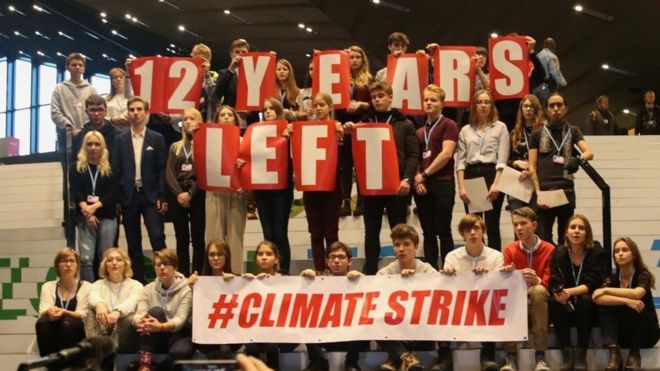
Demonstrators hold a slogan at UN climate talks in Katowice, Poland

climate cop

Climate change chimes with young people in a way that is sometimes missing with older people, who made up the bulk of negotiators in Poland.

Delegates to the UN climate conference in Poland have reached agreement on how to implement the 2015 Paris Climate Accord, which comes into force in 2020. What are the key points to come out of the meeting?

1. The rules are key to the game

However dull it may be, the operational rules for the 2015 Paris climate agreement will govern the way the world tackles climate change for decades to come.
The key thing was not to unravel the carefully negotiated Paris agreement by having one set of rules for the rich countries and another one for the poor.
By that measure the conference was a success with China showing leadership by not pushing for a return to the old ways of countries who did, and countries who didn't.
Also helping that effort was the US. Ensuring that the China and the US face similar regulations has long been a key of American policy.
Keeping everyone on the same page also delighted the EU. Climate commissioner Miguel Arias Canete explained how the new rules would work.
"We have a system of transparency, we have a system of reporting, we have rules to measure our emissions, we have a system to measure the impacts of our policies compared to what science recommends."
 
To keep everyone in check, the rules will also contain a compliance mechanism, which means that countries that don't submit their reports on time will face an inquiry.
The new regulations are "flexible" for developing countries, meaning they can sign up to the rules at a later date.

2. Science is worth fighting for

One of the biggest rows at this meeting was over a key scientific report from the Intergovernmental Panel on Climate Change (IPCC).
A group of countries including Saudi Arabia, US, Kuwait and Russia refused to "welcome" the IPCC study.  They merely wanted to "note" the contents. Efforts to find a compromise ended in failure.
However that was not the end of the matter.
The vast majority of countries felt that acknowledging the science was critical at this conference.
Their efforts did finally ensure that the IPCC was recognized - but many felt it was a token effort.
"That science is unsettling and it doesn't connect it to the need to do more," said Camilla Born from the environmental think tank E3G.
"The deal looks at it in isolation, it's an elegant compromise but it's not really enough."

3. International spirit is still alive

Many countries had worried that with the rise of nationalism in many countries and the recent election of Jair Bolsonaro as Brazil's president, the international co-operation needed to tackle climate change might be in danger.
For many getting agreement here in Katowice was less about technical rules and more about showing that the international spirit is still alive and has teeth.
"I think the beauty of multilateralism is that it is the effort of everybody," said Spanish Ecology Minister Teresa Ribera.
"And what we have seen is that everybody has supported the package, no single country has decided to step down.
"It is very difficult. It is like organizing a party for 200 friends, and there's a single menu that everybody has to eat. It is not so easy but we have got it. That's fantastic!"

4. A win for the process but not for the planet?

While negotiators have been congratulating themselves on a job well done in landing the rulebook, there are many voices here who feel that the agreement does not go far enough.
They point to the strength of the science, and the public recognition of the impacts of climate change seen this year in heatwaves and wildfires.
Many environmental campaigners believe that Katowice Poland was a missed opportunity for radical action.
"We have ended up here with more of a coal trade fair than a climate convention," said Mohamed Adow from Christian Aid, referring to the efforts to promote coal by Poland and the US at this conference.
"We haven't acted in good faith, particularly for the young. That we take seriously what science is telling us and we are responding to it. That message didn't come through.
"If people think the rulebook is the way to get the world on that path, it is not robust or ambitious enough."

5. New voices are emerging

One of the most striking things about this conference of the parties was the presence of energized young people in far greater numbers than ever seen at a COP before.
The sense that perhaps this UN process doesn't quite connect with the modern world was summed up best by Mohamed Nasheed, the former president of the Maldives and now their lead climate negotiator.
"Almost 10 years since I was last at these climate negotiations, I must say, nothing much seems to have changed."
"We are still using the same old, dinosaur language. Still saying the same old words.
"Still making the same tedious points."
It would be hard to argue with this view given the shenanigans that played out at the end, when one country, Brazil, held up progress at the talks on one issue for a couple of days.
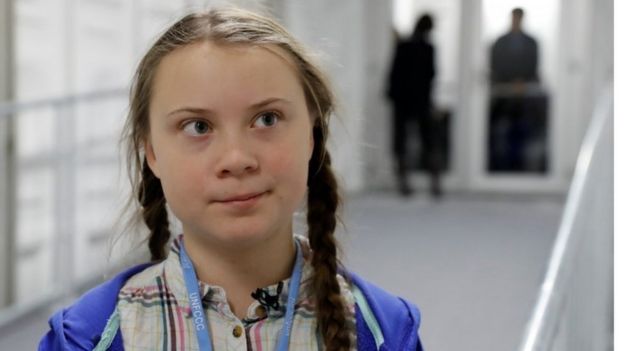
Perhaps the most memorable image of this meeting was that of 15-year-old Swedish student Greta Thunberg.

Teenage activist Greta Thunberg is seen inside the venue of the COP24 U.N. Climate Change Conference 2018 in Katowice,

This teenager who has organized school strikes in Sweden held daily press conferences here to drive home her message that platitudes and warm words just aren't enough anymore.
Her message was sharp and succinct.
"We cannot solve a crisis without treating it as a crisis."

Tuesday, February 12, 2019

Trump taunts Amy Klobuchar for talking global warming in 'virtual blizzard'

by Melissa Quinn            | February 10, 2019 
President Trump on Sunday again sought to cast doubt on the existence of climate change, ridiculing Sen. Amy Klobuchar, D-Minn., for discussing global warming at her presidential campaign kickoff in a “virtual blizzard of snow.”

“Well, it happened again. Amy Klobuchar announced that she is running for President, talking proudly of fighting global warming while standing in a virtual blizzard of snow, ice and freezing temperatures. Bad timing. By the end of her speech she looked like a Snowman(woman)!” he tweeted. 

 Klobuchar formally announced Sunday her candidacy for president at an outdoor event in Minnesota as snow fell around her and blanketed the crowd there to cheer her on.

As part of her platform, the Democratic senator said as president she would “put forth sweeping legislation to invest in green jobs and infrastructure.” Klobuchar also vowed the U.S. would rejoin the Paris Agreement on the first day of her presidency. Trump announced in June 2017 the U.S. was withdrawing from the international accord within the United Nations Framework Convention on Climate Change.

Klobuchar is now the fifth Democratic senator to officially enter the 2020 presidential race, following Sens. Kamala Harris of California, Kirsten Gillibrand of New York, Cory Booker of New Jersey, and Elizabeth Warren of Massachusetts.

In the past, Trump has cited cold weather in an effort to cast doubt on climate change. In November, he tweeted, “Brutal and Extended Cold Blast could shatter ALL RECORDS — Whatever happened to Global Warming?”

But, as the National Oceanic and Atmospheric Administration pointed out last month, in response to another mocking Trump tweet, "Winter storms don't prove that global warming isn't happening."

Most scientists believe climate change is occuring and that it is accelerated by fossil fuel consumption. While global temperatures on average are on the rise, that does not preclude cold weather.
Thanx Melissa Quinn

Knight Sha

Monday, February 11, 2019

Environment in multiple crises - report

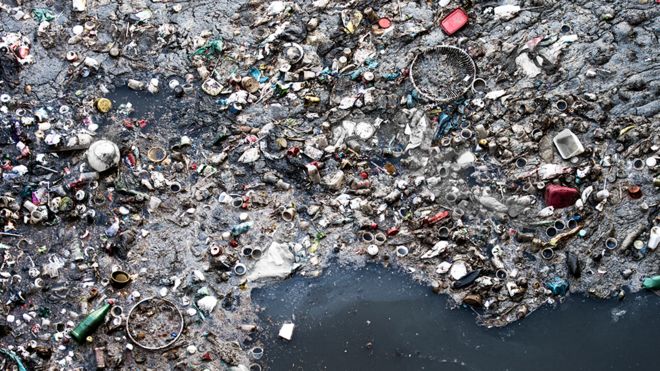
Rubbish dump
The "human footprint" is creating multiple challenges, including a trash crisis in the oceans
 
Politicians and policymakers have failed to grasp the gravity of the environmental crisis facing the Earth, a report claims. The think-tank IPPR says human impacts have reached a critical stage and threaten to destabilize society and the global economy.
Scientists warn of a potentially deadly combination of factors. These include climate change, mass loss of species, topsoil erosion, forest felling and acidifying oceans. The report from the Institute for Public Policy Research says these factors are "driving a complex, dynamic process of environmental destabilization that has reached critical levels.
"This destabilization is occurring at speeds unprecedented in human history and, in some cases, over billions of years."

So what is needed?

The IPPR warns that the window of opportunity to avoid catastrophic outcomes is rapidly closing.
The authors urge three shifts in political understanding: on the scale and pace of environmental breakdown; the implications for societies; and the subsequent need for transformative change.
​They say since 2005, the number of floods across the world has increased by 15 times, extreme temperature events by 20 times, and wildfires seven-fold.
At least climate change features in policy discussions, they say – but other vitally important impacts barely figure.
 
 
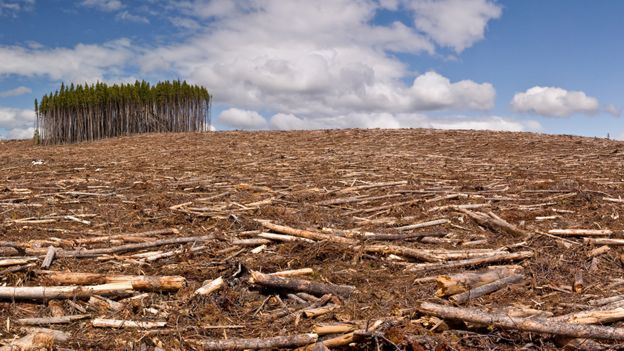
Tree felling
Extreme forest logging

What issues are being under-played?

  • Topsoil is being lost 10 to 40 times faster than it is being replenished by natural processes ​
  • Since the mid-20th Century, 30% of the world's arable land has become unproductive due to erosion
  • 95% of the Earth's land areas could become degraded by 2050
The IIPR says many scientists believe we have entered a new era of rapid environmental change.
The report warns: "We define this as the 'age of environmental breakdown' to better highlight the severity of the scale, pace and implications of environmental destabilization resulting from aggregate human activity."

Will society take the solutions offered?

Simon Lewis, Professor of Global Change Science, said, 
"Future problems with food supplies could cause price spikes that drive civil unrest, while increases in levels of migration can strain societies.
"Both together could overload political institutions and global networks of trade.
"This century will be marked by rapid social and environmental change - that is certain. What is less clear is if societies can make wise political choices to avoid disaster in the future."

Harriet Bulkeley, a geography professor, said, that the IPPR paper was a good interpretation of the current evidence, but she said it raised the question of how firm evidence of environmental threats had to be to prompt governments to action.
"We know lots of good things to do," she said, "but often the argument is made that we need to have 'evidence-based policy'.
"This can, of course, be used as an excuse for delay. So, I guess the question is how much more evidence is needed for action?"